
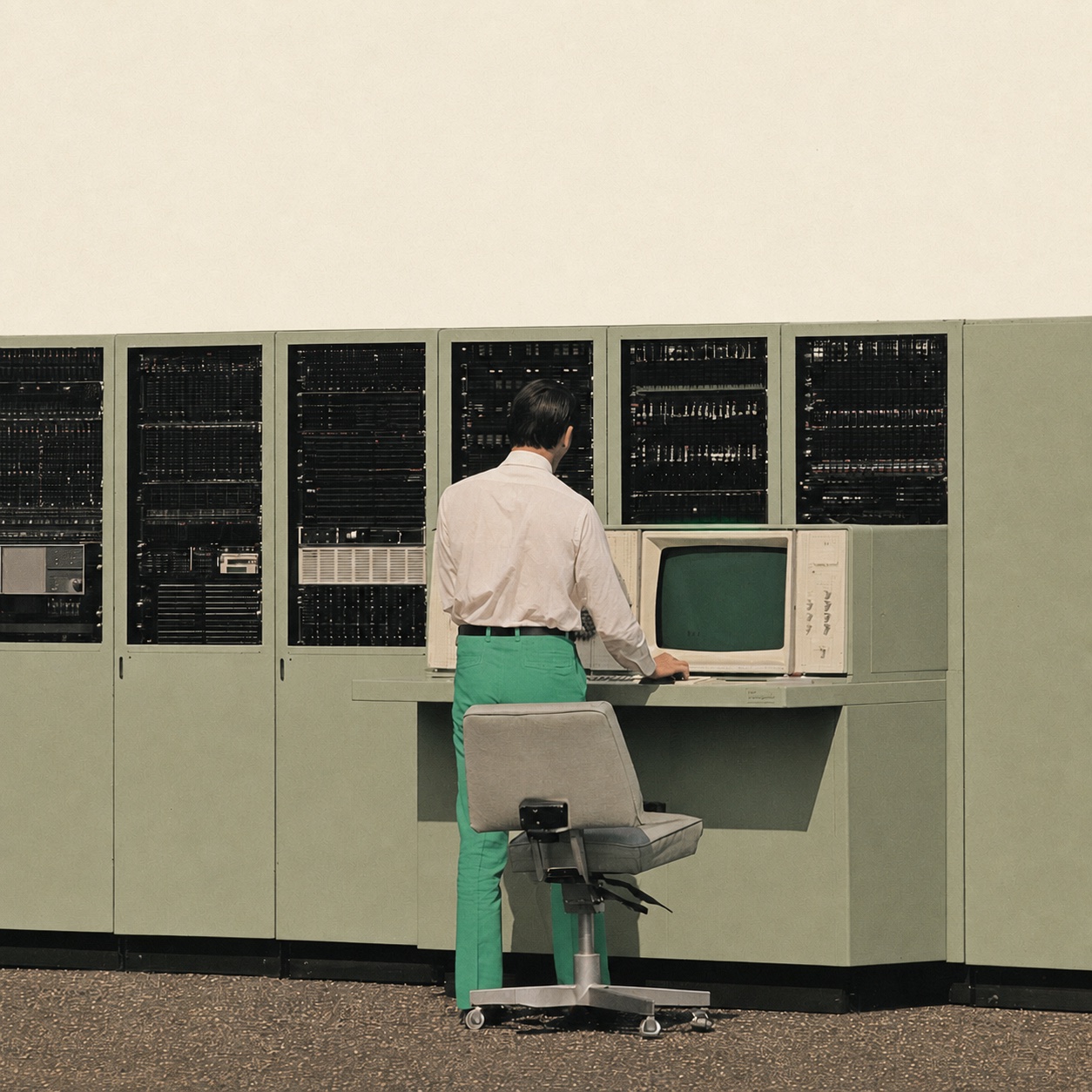
A dashboard can tell you that conversion is down, inventory is aging, or cash is tighter than expected. What it cannot tell you—at least not by itself—is what the business has already agreed to do about it, who owns the next move, what trade-offs were considered, or whether the decision was carried through.
That distinction matters because the work of operating a company does not happen inside a chart. It happens across conversations, exceptions, approvals, and commitments. The graph is evidence. The business still needs judgment.
Visibility solved yesterday’s problem.
For years, the promise of business software was visibility. Put every important number on one screen and leaders would finally know what was happening. That was a meaningful improvement over spreadsheets passed around by email and reports assembled at the end of the month.
But as the software stack expanded, visibility fragmented. The store knows what sold. The advertising platform knows what attracted attention. The accounting system knows what was paid. The team knows what was promised. Each system can be correct while the company still misses the point.
The operator becomes the integration layer. They move between tabs, reconcile mismatched definitions, remember the exception discussed on Tuesday, and decide whether today’s number is genuinely alarming or merely expected. The dashboard saves calculation time while leaving coordination work largely untouched.
The most expensive gap is often not between two databases. It is between a signal and the decision that should follow.
Kordn field note 001
Context is the missing operating layer.
A number becomes useful only when it is placed inside the reality of the business. A rise in cost per order could be a problem, a deliberate experiment, or the predictable consequence of entering a new market. The metric is identical. The meaning is not.
Useful context includes the threshold the team agreed upon, the reason behind it, the other systems that support or contradict the signal, and the actions that are permitted when that threshold is crossed. Without that context, software can highlight a change but cannot responsibly prepare the next step.
Company memory is not a document archive.
Documents store what was written. Company memory must also preserve what was decided and why. It should connect a decision to its evidence, record the assumptions present at the time, and make the resulting commitment visible until it is completed or deliberately changed.
This is especially important in growing companies. Informal context works when five people sit in the same room. It breaks when teams expand, responsibilities overlap, and the same operational question touches finance, marketing, customer support, and inventory.
When memory remains trapped in individuals, every handover resets part of the business. When memory is structured around decisions and commitments, the company can learn without depending on perfect recall.
The test is follow-through.
A useful operating system should do more than send another notification. It should make the next action clearer, safer, and easier to complete. That means identifying the relevant signal, assembling its context, explaining the reasoning, finding the owner, and retaining the thread until the outcome is known.
Human approval remains central. The goal is not to remove judgment from the business. It is to give judgment better preparation: verified inputs, visible assumptions, and a recommendation whose sources can be inspected.
A practical diagnostic
Has your business outgrown dashboards alone?
- Important decisions require checking several systems and asking multiple people.
- The reason behind a past decision is harder to find than the decision itself.
- Actions agreed in meetings regularly need manual chasing.
- Exceptions live in chat threads, inboxes, or one person’s memory.
- Leaders see the same alerts repeatedly because ownership is unclear.
If several of these are familiar, another dashboard may improve the view without changing the operating burden. The next step is not necessarily more automation either. It is a connected layer that understands the company’s context and prepares accountable action without taking control away from the people responsible.
That is the shift from business intelligence to operating intelligence: from knowing what happened to preserving what it means, what was decided, and what must happen next.